


Views: 0 Author: Site Editor Publish Time: 2026-06-29 Origin: Site


Improper cable management represents far more than a simple compliance failure. It serves as a primary driver of operational downtime, severe safety incidents, and escalated maintenance costs in complex electrical environments. When technicians face a tangled maze of undocumented wires, operational risks compound immediately. Tracing unknown lines delays critical repairs and puts personnel in direct danger.
We define Cable Identification at an enterprise level as a comprehensive safety framework. It goes far beyond basic wire colors. Effective identification encompasses standardized labeling, durable physical tagging, and systematic documentation across your entire facility. This structured approach removes guesswork from daily electrical operations.
The purpose of this guide is to help facility managers, procurement teams, and electrical contractors evaluate proven identification strategies. You will learn how to select resilient cable markers tailored to harsh deployment realities. We also provide actionable insights on implementing standardized field practices. These methods mitigate execution risks and safeguard your critical infrastructure against catastrophic errors.
Safety & Risk Mitigation: Rigorous cable identification acts as a critical fail-safe, drastically reducing the risk of catastrophic incidents (e.g., accidental cutting by medium-voltage splicers).
Operational Efficiency: Standardized labeling accelerates troubleshooting in utility plants and dense server environments, converting hours of tracing into minutes of targeted action.
Compliance Baseline: Adhering to NEC (National Electrical Code) best practices is the baseline; standardizing beyond the code prevents costly audit failures and rework.
Strategic Procurement: Selecting the right materials (UV-resistant, chemical-proof) for cable markers requires mapping product specifications directly to environmental deployment realities.
Misidentification carries incredibly high stakes in industrial and utility environments. Medium-voltage splicers face extreme hazards when interacting with poorly labeled infrastructure. Cutting into an active 15kV line due to an illegible tag often results in devastating arc flash incidents. These events threaten lives and destroy adjacent equipment. Rigorous Cable Identification acts as a non-negotiable physical barrier against these catastrophic mistakes. It forces technicians to verify the exact circuit before initiating any destructive action. You establish a clear visual fail-safe by maintaining accurate labels. This proactive layer of defense drastically reduces accidental energization. It protects front-line workers performing high-risk maintenance tasks.
Routine upgrades and emergency repairs inherently invite human error. Technicians working under tight deadlines or high stress may rush through verification protocols. Proactive identification systems directly counter this tendency. They mistake-proof the maintenance workflow. Clear, standardized tags remove ambiguity during lockout/tagout (LOTO) procedures. Workers can isolate specific circuits with absolute confidence. They do not need to rely on outdated schematics or tribal knowledge. This visual clarity eliminates the common trap of repairing the wrong line while leaving a fault active. You ensure every contractor and in-house electrician operates from the exact same playbook.
Unplanned facility outages cost industrial operations thousands of dollars per minute. The hidden cost of "cable tracing" heavily inflates these downtime metrics. When a fault occurs in an undocumented system, technicians spend hours manually tracing lines through congested trays. Clearly labeled systems eliminate this diagnostic bottleneck. Rapid fault isolation transforms an agonizing multi-hour search into a brief, targeted action. Technicians locate the problem instantly and begin repairs. This rapid response directly improves facility uptime metrics. Investing in durable labeling hardware yields a massive return by slashing the duration of future power interruptions.
The National Electrical Code (NEC) establishes the minimum legal standards for wire identification. It mandates specific protocols, such as using green for equipment grounding conductors and white or gray for grounded neutral conductors. However, treating NEC compliance as your final goal leaves significant operational gaps. Enterprise standards demand much higher fidelity. Operational excellence requires labeling every individual circuit, phase, and destination point. You must track where a line originates and exactly what load it serves. Moving beyond basic code requirements prevents expensive audit failures. It creates a robust, self-documenting infrastructure ready for future expansions.
Electrical cable colors serve as the foundational safety layer in any facility. They provide an immediate visual cue regarding a conductor's purpose and danger level. Standardized colors distinguish high-voltage utility feeds from low-voltage data lines at a glance. For instance, workers instantly recognize fire alarm circuits or specialized isolated ground feeds based on jacket hues. This immediate recognition speeds up preliminary diagnostics. However, you cannot rely on color alone. Facility managers must pair strict color coding rules with alphanumeric tagging. This hybrid approach ensures technicians understand both the broad voltage category and the specific circuit identity.
Large facilities frequently employ multiple third-party contractors for distinct electrical projects. Maintaining unified tagging systems across these different groups presents a massive logistical challenge. Without strict oversight, each vendor will introduce their preferred naming conventions and marker types. This creates a chaotic, unreadable environment for future maintenance teams. You must enforce a single site-wide identification standard.
We recommend establishing the following standardization practices:
Mandate a specific nomenclature: Require a standardized format (e.g., Panel Box-Circuit-Destination) for every new installation.
Specify approved materials: Limit contractors to pre-approved industrial tags rather than cheap commercial alternatives.
Implement gateway audits: Refuse project sign-off until the contractor demonstrates 100% compliance with your labeling hierarchy.
Centralize a digital registry: Update your master facility schematics the moment a contractor applies a new physical tag.
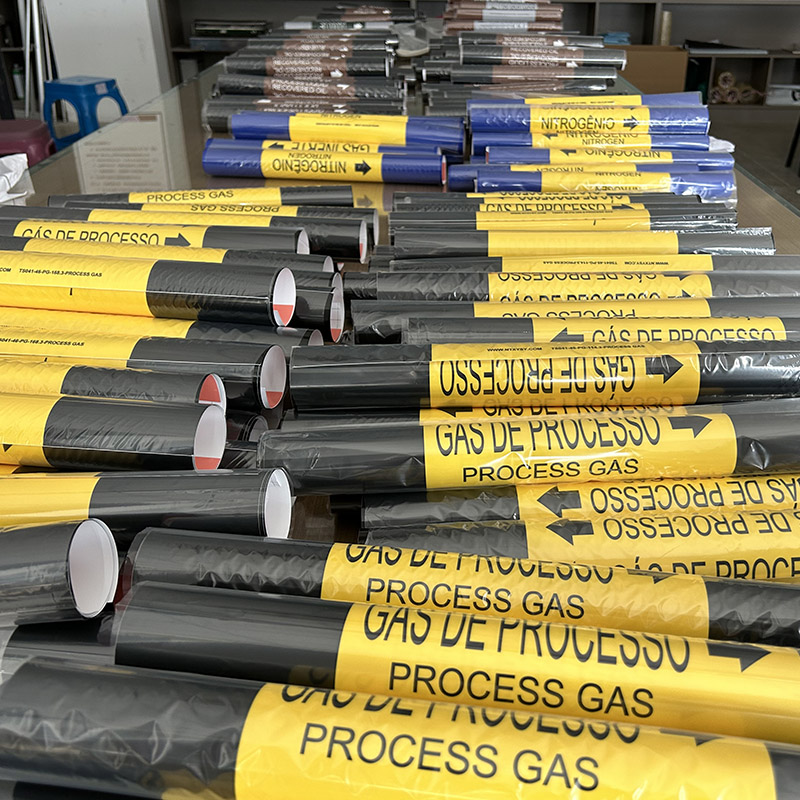
Relying solely on jacket colors presents severe limitations, especially in aging infrastructure. Jacket pigments degrade aggressively when exposed to UV light or chemical fumes. Over a decade, a distinct orange jacket may fade into an unrecognizable pale yellow. Furthermore, industrial dirt, grease, and soot quickly obscure original wire colors. Complex retrofits often force electricians to repurpose existing lines, making original color codes dangerously misleading. You must view color coding as a helpful preliminary indicator rather than a definitive source of truth. Relying on color alone during a critical repair invites misidentification and invites safety incidents.
Procurement teams must carefully navigate physical tagging options to ensure long-term legibility. The market offers several distinct formats designed for specific applications. Heat-shrink sleeves provide a permanent, low-profile solution for terminated wires within control panels. Wrap-around labels offer flexibility for lines already installed and terminated. However, heavy-duty environments demand rigid cable markers. These polyurethane or stainless steel tags attach via heavy-duty ties. They withstand physical abrasion and harsh environmental conditions. Selecting the correct marker type depends heavily on whether you are tagging bundles, individual wires, or massive utility feeds.
Applying permanent identification to legacy lines requires precise technological verification. You cannot tag an undocumented line based on an educated guess. Technicians in utility plants rely heavily on diagnostic tools to map out old infrastructure. Tone generators and low-voltage testers help electricians trace a signal from a remote sensor back to the main control panel. Advanced circuit tracers can identify live loads without interrupting power. We use these verification technologies to confirm the exact source and destination of a line. Only after this rigorous testing should you apply a permanent physical tag to the asset.
You must evaluate marker materials against the specific conditions of your facility. A label designed for a climate-controlled server room will fail within weeks on a rooftop solar array. UV exposure aggressively degrades standard plastics, turning them brittle. Chemical processing plants require markers resistant to corrosive vapors and aggressive cleaning solvents. Extreme temperatures, whether in cold storage or near industrial furnaces, cause improper adhesives to fail completely. You must map the product specifications directly to your environmental realities. Specifying industrial-grade polyurethane or stainless steel prevents premature degradation and ensures critical safety information remains intact.
The printing technology you select dictates the lifespan of your labels. Standard ink fades rapidly when exposed to industrial lighting, moisture, or friction. To prevent fading over a 10-to-20-year lifecycle, you must utilize advanced marking techniques. Laser engraving physical tags provides an indestructible, permanent record. For flexible labels, thermal transfer printing drastically outperforms standard ink. Thermal transfer uses heat to melt a resin ribbon directly onto the label substrate. This creates a chemical bond that resists smearing, UV bleaching, and solvent exposure. Your procurement strategy must prioritize these advanced printing methods to guarantee long-term legibility.
Deploying identification systems across a massive facility involves significant labor costs. You must carefully assess the scalability of your chosen application method. For large-scale rollouts with known schematics, ordering pre-printed customized batches saves thousands of labor hours. Technicians simply attach the ready-made tags during installation. Conversely, dynamic environments with frequent retrofits benefit from on-site mobile printing solutions. Electricians can generate custom tags instantly as they verify undocumented lines. You must balance the upfront hardware costs against the ongoing labor efficiency.
The following chart illustrates how different labeling methods compare across critical performance metrics:
Printing Method | Estimated Lifespan | Environmental Resistance | Ideal Deployment Scenario |
|---|---|---|---|
Standard Ink / Pen | 1 to 3 Years | Low (Prone to smearing and fading) | Temporary tagging during active construction. |
Thermal Transfer Label | 7 to 10 Years | High (Resists UV and mild solvents) | Indoor control panels, data centers, and low-voltage trays. |
Laser Engraved Rigid Tag | 15 to 25+ Years | Maximum (Withstands harsh chemicals and extreme temps) | Outdoor utility feeds, chemical plants, and high-voltage lines. |
Implementing a tagging system on a new build differs entirely from retrofitting an older facility. Day-1 identification on new installations integrates seamlessly into the construction workflow. Contractors simply label wires as they pull them, referencing fresh blueprints. Retrofitting undocumented legacy systems requires a highly deliberate, labor-intensive approach. You face significant safety protocols when handling old, potentially brittle wiring. Technicians must methodically trace, verify, and tag each line without accidentally disrupting adjacent live processes. Retrofits demand dedicated downtime planning and rigorous peer-review verification to ensure the newly applied labels reflect absolute reality.
You cannot treat all cables equally when establishing labeling protocols. Low-voltage data and control cables require dense, highly specific alphanumeric strings to differentiate hundreds of identical-looking connections. The primary risk here is operational downtime if a switch is misconfigured. High-voltage utility lines demand an entirely different approach focused purely on life safety. These critical lines require oversized, highly visible warning tags. The materials must withstand intense environmental stress and clearly indicate phase designations. Mixing up these protocols compromises safety. Applying a delicate data-center label to a 480V industrial feed guarantees the label will deteriorate rapidly.
Even the best tagging system degrades if ignored. You must institute a rigorous shortlisting logic for post-installation audits. Before authorizing project sign-off, supervisors must walk the site to ensure contractors applied tags securely and legibly. We recommend implementing a routine inspection schedule. Check labels during standard preventative maintenance windows. Look for zip ties cracking under thermal stress or print fading from chemical exposure. If tags appear compromised, replace them immediately. Consistent auditing ensures your facility remains compliant and your technicians remain safe year after year.
Cable identification sits at the critical intersection of operational safety, regulatory compliance, and proactive asset management. Treating labels as an afterthought exposes your facility to severe electrical hazards and paralyzing downtime. Implementing a standardized, durable tagging system ensures technicians can execute rapid repairs without second-guessing circuit paths. You transform a chaotic wire maze into a navigable, predictable infrastructure.
To secure your facility, you must take immediate action. First, audit your current labeling systems to identify areas suffering from environmental degradation. Next, review your site-specific contractor guidelines to mandate strict naming conventions for all future third-party work. Finally, specify industrial-grade cable markers and thermal printing technologies for your upcoming infrastructure upgrades. These proactive steps will safeguard your personnel and streamline your operational efficiency.
A: Standard color codes vary significantly by region and voltage. In the United States (NEC), green typically designates ground wires, while white or gray indicates neutral conductors. Un-grounded phase wires for 120/208/240V systems generally use black, red, and blue. You must always consult local electrical codes, as global consistency does not exist.
A: A cable tie primarily functions as a mechanical fastener used to bundle wires together and secure them to trays. A marker serves an information-bearing function, displaying alphanumeric identification data. Combined solutions, known as marker ties, feature a flat labeling surface attached to a fastening strap for streamlined installation.
A: The National Electrical Code mandates specific visual identification for grounded, grounding, and ungrounded conductors. It strictly requires permanent, legible marking at all termination points, splice locations, and pull boxes. The code ensures basic safety baselines, but facilities usually require denser tagging for operational clarity.
A: You should audit identification systems annually or during scheduled preventative maintenance cycles. Facilities with harsh environments, involving intense UV exposure or chemical washdowns, require semi-annual inspections. Replace any markers showing signs of cracking, slipping, or fading before they become completely illegible.


