


Views: 0 Author: Site Editor Publish Time: 2026-06-30 Origin: Site


Improper management of wiring infrastructure acts as a primary driver of extended network downtime. It directly inflates Mean Time to Repair (MTTR) during critical electrical outages. A basic paper sticker might survive day one on a new installation. However, enterprise-grade Cable Identification must endure severe environmental stress long after deployment. It must outlast high technician turnover and shifting team dynamics. It also needs to support massive infrastructure scaling across multiple facilities. When wires look identical, technicians inevitably resort to guessing. This dangerous guessing leads to accidentally disconnected servers and prolonged system outages. We designed this guide as a highly pragmatic framework. You can use it to evaluate and select the correct identification methods confidently. We focus heavily on matching materials to specific installation phases. We also explore intense environmental demands and strict industry compliance requirements. By the end, you will understand exactly how to build a resilient, scalable labeling taxonomy.
Selecting the right cable identification method depends heavily on whether the installation is pre-termination or post-termination.
Environmental factors (UV exposure, chemical contact, temperature) dictate material choice, separating temporary fixes from permanent infrastructure.
Adopting industry standards (like TIA-606-C) for naming conventions is just as critical as the physical labeling material.
Balancing upfront hardware costs (printers) with long-term operational efficiency is key to scaling your labeling strategy.
To build a reliable documentation system, you must understand your physical materials. Each option serves a distinct purpose in the field. Using the wrong format guarantees premature failure.
Self-laminating wraps remain an incredibly popular choice worldwide. They work exceptionally well for general IT data centers. Technicians apply them easily during post-termination phases. The design features a white print zone and a long clear tail. This clear tail wraps tightly around the printed text to protect it. They offer high flexibility for daily operations. You can wrap them around varied wire diameters quickly.
However, they have distinct physical drawbacks. They frequently suffer from a failure known as "flagging." Flagging happens when the internal adhesive degrades over time. High-heat server racks accelerate this chemical failure. The edges unpeel and stick to adjacent wires. You should avoid them in permanently hot or highly contaminated environments.
Heat-shrink tubing provides unmatched durability for critical systems. We recommend it heavily for high-vibration applications. Industrial panels, automotive builds, and aerospace environments benefit from this secure fit. It creates a permanent, slip-free bond around the wire jacket. The polyolefin material shrinks tightly upon directed heating. You eliminate the risk of adhesive degradation entirely because it uses no glue.
Yet, heat-shrink tubing carries operational limits. It requires a strict pre-termination application process. You must slide the tube on before adding the connector jack. You also need a dedicated heat gun on site. This extra heating step slows down rapid deployments significantly.
Heavy-duty industrial panels require highly robust solutions. A PVC cable marker excels in these demanding, high-friction spaces. These sleeves deliver rigid, high-visibility alphanumeric coding. They resist severe abrasion and aggressive chemicals natively. Technicians slide them onto wires during pre-terminated setups. They feature interlocking edges to keep text perfectly aligned.
You do not rely on sticky adhesives. You simply sequence the characters to spell out specific codes. One crucial detail involves exact sizing. You must select the precise inner diameter for your specific wires. If the sleeve is too loose, it slips down the jacket. If it is too tight, you risk crushing the internal conductors.
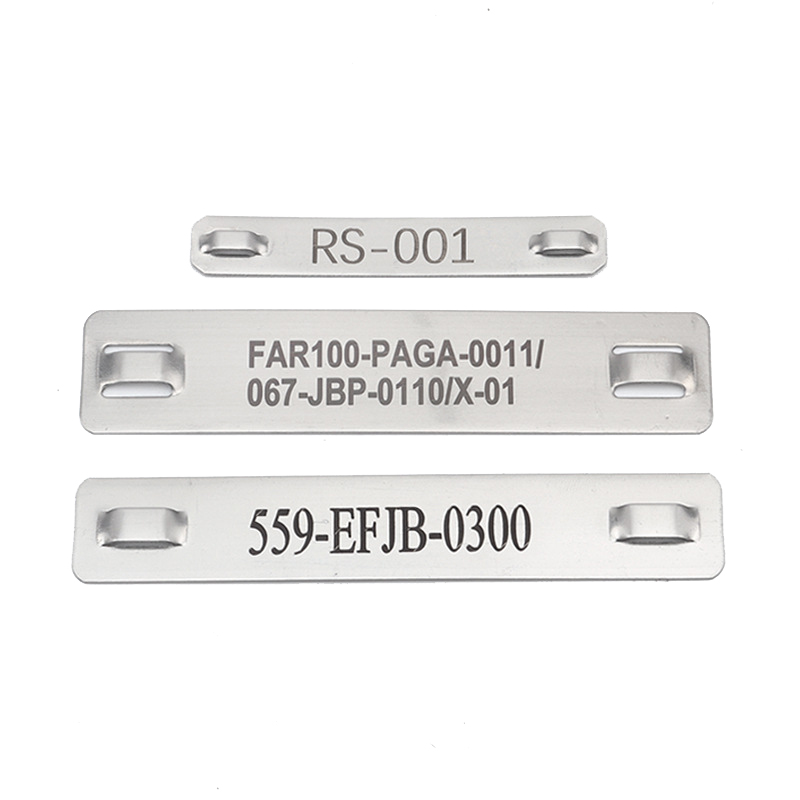
Some scenarios involve massive wire bundles wrapped together. Thick power conduits require much larger identifiers. Tie-on tags and marker plates fit this specific need perfectly. They attach securely using standard zip-ties or tension straps. This makes them ideal for complex retrofit jobs. You can secure them easily to existing infrastructure. You never have to disconnect active network links.
Despite their immense convenience, they pose physical risks. They can feel bulky in tightly packed overhead trays. Improperly routed tags easily catch on adjacent wiring. This unexpected snagging can rip out delicate fiber optics during routine maintenance.
Color-coding provides immediate visual categorization for busy teams. It allows technicians to glance at a rack and understand its basic layout. Industry best practices often follow standardized color palettes:
Blue: Dedicated to security cameras and access control.
Yellow: Denotes VoIP phone systems.
Green: Marks general data traffic and workstations.
Red: Highlights critical backbone links or fire alarms.
It serves as an excellent supplementary method. It drastically speeds up basic visual audits. However, color-coding remains insufficient as a standalone strategy. Complex troubleshooting requires specific origin and destination data. A solid red jacket tells you nothing about the specific switch port. Always pair color codes with precise alphanumeric text.
Identification Method | Best Application Phase | Primary Advantage | Notable Limitation |
|---|---|---|---|
Self-Laminating Wraps | Post-termination | Highly flexible and easy to apply | Prone to flagging in high heat |
Heat-Shrink Tubing | Pre-termination | Permanent, slip-free bond | Requires heat gun, slower deployment |
PVC Marker Sleeves | Pre-termination | High visibility, chemical resistant | Requires precise diameter sizing |
Tie-On Tags | Retrofit / Post-termination | Ideal for thick bundles | Can catch on adjacent wires |
A strong physical label fails entirely without a logical naming system. Industry standards ensure everyone speaks the same technical language. This consistency prevents catastrophic errors during emergencies.
The TIA-606-C standard governs telecommunications infrastructure administration globally. It provides a highly unified, vendor-neutral approach. It dictates exactly how you should document network assets. Following this standard removes daily guesswork. It standardizes the specific format for labeling racks, patch panels, and wall ports. Auditors actively look for this compliance during facility inspections. Adhering to TIA-606-C physically protects your infrastructure. It ensures future contractors understand your layout immediately.
Many beginners label wires based purely on immediate function. They might print "Router 1" and consider the job done. This bad habit causes massive confusion later. You must label based on specific origin and destination points. We call this logical versus physical identification. A proper sequence lists the exact hardware location.
A standardized naming string usually includes:
Building or Facility Code
Telecom Room Number
Specific Rack Identifier
Patch Panel Letter
Exact Port Number
For example, "TR2-R1-P2-04 to TR2-R3-P1-12" tells a complete story. It directs the technician exactly where the wire goes. This method completely eliminates the need to trace lines physically through ceilings.
Organizations often suffer from isolated "tribal knowledge." One senior engineer might invent a highly custom naming format. When they eventually leave, the entire system becomes a mystery. This operational risk cripples rapid troubleshooting efforts. You must enforce a strict, documented naming taxonomy globally. Every low-voltage contractor must follow it perfectly. Every electrical team must use the exact same format. Consistency guarantees field clarity. Write your taxonomy down and store it centrally. Require mandatory training for anyone touching your server racks.
Choosing the right format requires careful environmental analysis. You must match the material chemistry to its physical reality. Ignore the environment, and your system will fail.
Your timeline directly dictates your material options. We evaluate pre-termination options first. Heat shrink tubes and slide-on sleeves require raw, unfinished ends. You apply them before crimping the final jacks. They offer superior permanence and a cleaner look. Post-termination necessities arise during active system upgrades. You simply cannot unplug live servers to add a sleeve. Self-laminating wraps and zip-tie tags become mandatory here. Always audit your project phase before ordering supplies.
Harsh environments destroy cheap materials rapidly. You must assess specific facility hazards carefully. Outdoor applications face relentless UV light exposure. Basic vinyl crumbles quickly under direct sunlight. You need specialized UV-resistant materials. Industrial plants and HVAC units generate extreme ambient temperatures. Standard adhesives simply melt and slide off the jacket. Chemical solvents in manufacturing melt basic plastics. You must choose specialized material combinations. Nylon works well for indoor flexibility. Polyolefin handles extreme heat effectively. Match the chemical resistance to your specific room conditions.
An unreadable tag is entirely useless. You must consider how printed text survives over time. Basic direct thermal printers fade quickly. They react very poorly to ambient heat and friction. Thermal transfer printing solves this fundamental problem. It uses a heated resin ribbon to burn text into the surface. It provides excellent fade and smudge resistance. For extreme environments, laser-engraved markers offer true permanence. Pre-printed plates also guarantee long-term legibility. Consider how long the wire will remain in service. A ten-year backbone link requires a ten-year text solution.
Massive deployments force you to evaluate how you generate text. You must decide between printing on-site or ordering ahead. Each path carries specific operational burdens.
Mobile label printers offer incredible on-the-fly flexibility. Technicians carry them directly to the active server rack. They prove ideal for custom MACs (Moves, Adds, Changes). You can type a new name instantly. However, they carry hidden operational burdens. Proprietary ink cartridges run out frequently. Battery management becomes a daily frustration on large construction sites. Print durability varies wildly based on user settings and ribbon quality. You must manage these devices carefully to maintain fleet consistency.
Pre-printed kits streamline massive facility rollouts. They offer zero daily hardware maintenance. You never worry about dead batteries or jammed cartridges. Factories guarantee perfect legibility and alignment every time. They drastically speed up standardized, high-volume deployments. Technicians simply pull the required sequence from a sorting box. Their main drawback is utter rigidity. They offer zero flexibility for unexpected naming changes on site. If the network topology shifts mid-project, you must halt work and reorder parts.
We strongly advise adopting a balanced hybrid approach. Do not rely entirely on one singular method. Use pre-printed systems heavily for your core backbone infrastructure. Backbone links rarely change once properly installed. Pre-printed tags guarantee lasting perfection here. Conversely, deploy mobile printers for patch cords and edge devices. Edge devices undergo constant daily MACs. This hybrid logic maximizes both deployment speed and daily flexibility. It ensures your core remains pristine while allowing necessary agility.
Production Strategy | Operational Pros | Operational Cons | Ideal Use Case |
|---|---|---|---|
Mobile Printers | Instant adaptability, on-site corrections | Battery limits, cartridge management | Daily MACs, edge devices |
Pre-Printed Kits | Zero maintenance, guaranteed legibility | No flexibility for design changes | Core backbone links, massive rollouts |
Hybrid Approach | Balances speed and flexibility perfectly | Requires managing two distinct inventories | Large enterprise campuses |
Even the best materials fail if applied incorrectly. Avoid these frequent field errors to maintain infrastructure integrity. Proper application technique defines long-term success.
Technicians often label only the visible end of a wire. They skip the hidden destination end entirely to save time. We call this the single-end labeling trap. It represents a critical failure in system documentation. Emphasize the hard rule of labeling both ends perfectly. Each end must display matching source and destination data. If a technician pulls a dead line from the ceiling, they must know its exact origin. Skipping one end renders the entire tracking system useless.
Active construction sites generate massive amounts of drywall dust. Technicians also carry natural finger oils on their bare hands. These contaminants ruin adhesive-based wraps instantly. If you apply a wrap over dust, it bonds solely to the dust. It completely fails to bond to the wire jacket. This causes premature failure and rapid unpeeling. Always wipe the jacket clean before any application. Use a basic isopropyl alcohol wipe for heavily soiled lines. Clean surfaces guarantee maximum adhesive performance.
Rigid zip-ties pose a silent, ongoing threat to modern networks. Technicians often pull them as tight as humanly possible. Warn your teams aggressively against using rigid ties on delicate lines. Cat6a and fiber optics contain fragile internal structures. Over-tightening crushes the outer wire geometry. This physical degradation ruins signal integrity and causes dropped packets. We highly recommend using soft hook-and-loop straps. If you must use plastic ties, require specifically tensioned application tools. Never crush the outer jacket to secure a hanging tag.
Successful infrastructure tracking requires a highly disciplined approach. It effectively combines the right physical material with rigorous naming conventions. You must actively match your materials to specific environmental hazards to ensure survival. Adhering to standards like TIA-606-C eliminates costly guesswork for future teams. Employing a hybrid printing strategy balances deployment speed with permanent durability perfectly.
Your next steps should begin with a comprehensive facility audit. Review your current infrastructure against established compliance guidelines. Identify specific areas where cheap adhesives currently fail. Request various material samples to test directly in your specific environment. Evaluate exactly how a sturdy PVC cable marker handles your local chemical or temperature risks before massive procurement.
A: The TIA/EIA-606-C standard governs these administrative practices globally. It provides a unified, vendor-neutral framework for documenting telecom infrastructure. It dictates exact naming structures for racks, panels, and ports. Following it ensures consistent, rapid troubleshooting across all contractor teams.
A: You must strictly use post-termination methods. We highly recommend self-laminating wraps or rigid snap-on markers. These open designs wrap around or clip directly onto the jacket. They never require you to unplug live, active equipment.
A: Adhesives fail due to several extremely common factors. Constant high heat inside server racks degrades basic glues quickly. Applying them over existing dust or finger oils ruins the initial bond. Using standard indoor materials in harsh outdoor environments also causes rapid peeling.
A: Direct thermal printers use heat-sensitive paper that fades quickly over time. Thermal transfer technology uses a heated resin ribbon instead. It burns the text permanently into the surface material. Thermal transfer aggressively resists fading and remains the absolute requirement for proper infrastructure documentation.


