


Views: 0 Author: Site Editor Publish Time: 2026-10-23 Origin: Site


Picture a critical diagnostic test on a heavy-duty commercial vehicle. You are tracing a fault in a complex wire harness, and suddenly, you spot it. A frayed wire is grounding out against the bare metal chassis. Are your exposed electrical connections a hidden safety hazard waiting to trigger a catastrophic failure? Frayed cables degrade rapidly under constant mechanical stress and engine vibration. This inevitably leads to dangerous short circuits, massive data loss, and severe commercial downtime.
While DIY enthusiasts often reach for cheap, quick fixes, these makeshift solutions rarely withstand the test of time. They leave sensitive copper strands completely exposed to moisture, chemical solvents, and physical abrasion. Extruded polymer sleeves offer a permanent, professional-grade repair solution that restores the cable to its original factory integrity. This comprehensive engineering guide will walk you through exactly how to evaluate dimensions, calculate expansion ratios, and select the correct material compositions to execute a structurally sound repair.
Expansion Ratios Matter: Always select a ratio like 2:1, 3:1, or 4:1 that allows the sleeve to slide effortlessly over bulky connectors while still contracting tightly around the underlying slender wire.
Environment Dictates Composition: Standard polyolefin performs beautifully for most indoor residential repairs. In contrast, harsh, chemical-laden, or wet environments demand highly specialized polymers.
Adhesive Linings for Waterproofing: Specialized dual-wall variants feature an internal hot-melt adhesive that liquefies upon heating. This creates an impenetrable, watertight seal ideal for marine and exterior automotive applications.
Permanent vs. Temporary: Quick adhesive wraps are suitable for temporary color-coding. However, thermal-activated polymers provide a permanent, structurally rigid encapsulation.
In electrical engineering and everyday cable maintenance, ensuring a secure and insulated connection is absolutely paramount. Extruded from specialized industrial polymers, these pliable plastic sleeves contract significantly when exposed to a specific thermal threshold.
Understanding the mechanics behind this technology requires a brief dive into polymer science. During manufacturing, the plastic is extruded into a hollow cylinder. It is then subjected to radiation or chemical treatments to create cross-linked molecular bonds. The material is heated, expanded to a much larger diameter, and rapidly cooled. In this state, the polymer remembers its expanded form. Ultimately, when a technician applies targeted heat, the cross-linked memory activates. This forces the material to aggressively retract back to its original, smaller extruded footprint.
Specifically, this remarkable physical transformation provides several core benefits that make it an indispensable component in modern wiring:
Mechanical Armor: The hardened outer jacket provides a robust physical barrier against friction, sharp metal edges, and blunt impact. This safeguards the delicate underlying copper strands.
Structural Strain Relief: Cables almost always fail at the junction behind a connector due to repeated bending. The hardened plastic adds crucial rigidity, distributing mechanical stress evenly away from the fragile solder point.
Environmental Sealing: By blocking microscopic dust particles, chemical solvents, and ambient humidity from reaching conductive materials, it effectively halts oxidation and rust in its tracks.
Dielectric Insulation: High electrical resistance ensures that the repaired splice will not arc or short-circuit against adjacent conductive surfaces. This keeps your installations strictly compliant with international safety standards.
When confronted with a sliced wire jacket, many technicians instinctively reach for a sticky roll of tape. However, accurately evaluating the specific environmental demands of the repair is necessary to determine the most appropriate insulation methodology.
Traditional Electrical Tape remains a staple in toolboxes globally due to its immediate accessibility and sheer ease of use. It is primarily engineered for temporary emergency fixes, the rapid color-coding of complex phase wires, or insulating highly inaccessible splices where a solid, continuous tube physically cannot be slipped over the connection.
Despite this undeniable convenience, tape carries notable structural drawbacks. The mastic adhesive utilized on most commercial rolls degrades steadily over time. Furthermore, this degradation accelerates wildly when exposed to thermal cycling, which is the repeated heating and cooling inherent in electrical currents. In high-heat environments or areas experiencing significant physical friction, the tape will inevitably unspool. It flags at the ends and leaves behind a sticky, messy residue that actively attracts dirt and compromises the dielectric barrier.
For any repair requiring true longevity and structural integrity, thermal-activated sleeves are the superior, evidence-based choice. Because the material forms a continuous, seamless 360-degree encapsulation around the wire, there are zero overlapping edges that can unravel. Once recovered, it does not rely on pressure-sensitive adhesives to stay in place. Instead, it utilizes immense mechanical tension. This results in a sleek, professional aesthetic and a permanent fix that fiercely resists degradation from temperature fluctuations, aggressive physical handling, and harsh environmental exposure.
To clearly illustrate the operational differences, review the performance matrix below:
Performance Metric | Electrical Tape | Single Wall Tubing | Dual Wall Tubing |
|---|---|---|---|
Moisture Resistance | Low | Medium | Excellent (Submersible) |
Strain Relief | Poor | Good | Superior |
Longevity | 1 to 2 Years | 10+ Years | Life of the Cable |
Ideal Application | Temporary fixes, color coding | Indoor panels, basic splices | Marine, automotive, underground |
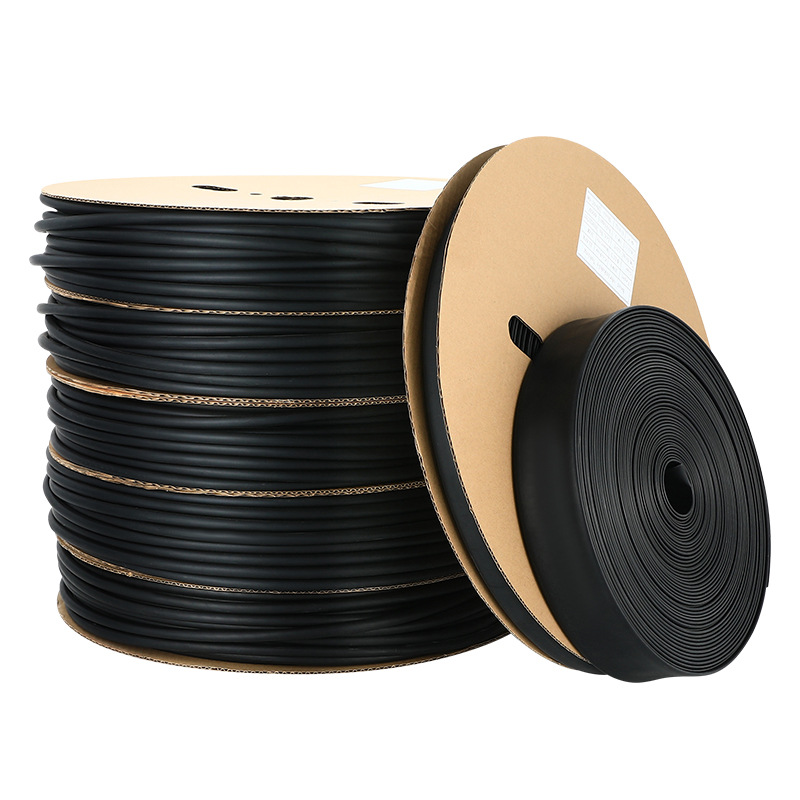
Selecting the correct expansion ratio is arguably the most critical step in the procurement process. The ratio simply represents the mathematical difference between the product's supplied inside diameter and its fully recovered inside diameter. Understanding this basic math is straightforward. A 2:1 ratio means the material will reduce to exactly half of its original size upon heating.
This configuration serves as the undisputed industry standard for general-purpose applications. It is exceptionally well-suited for standard wire insulation, simple inline butt splices, and uniform cables where the diameter of the bare wire and the surrounding jacket are relatively similar. Because it only needs to reduce by half, it requires significantly less thermal energy to fully recover. It also maintains a highly uniform, predictable wall thickness.
High-ratio variants are exclusively engineered for complex, uneven topographies. These extreme ratios become essential when the sleeve must slide over a remarkably bulky connector. Think of a modern USB-C plug, an RJ45 ethernet jack, or a wide automotive spade terminal. The tubing must clear this obstacle but still contract tightly onto a much thinner underlying data wire.
For instance, a premium 4:1 sleeve supplied at 12mm can glide effortlessly over a 10mm connector head. Yet, upon activation, it possesses the mechanical capacity to shrink all the way down to 3mm. This fiercely grips the delicate wire trailing behind the plug. This extreme adaptability makes 3:1 and 4:1 ratios indispensable for modern consumer electronic repairs and custom harness builds.
Beyond the mathematical ratio, the internal construction of the sleeve dictates its environmental resilience. Technicians must consciously choose between standard single-layer and specialized dual-layer configurations based entirely on anticipated moisture exposure.
Single wall construction consists of one uniform layer of cross-linked polymer, most commonly flexible polyolefin. It is the default choice for general electrical insulation, wire bundling, basic strain relief, and aesthetic color-coding. While it offers excellent mechanical defense, it does not create a hermetic, airtight seal. Consequently, it is strictly recommended for dry, climate-controlled indoor environments or enclosed industrial control panels where direct exposure to standing water or corrosive fluids is impossible.
When humidity, rain, or total submersion is a factor, Dual Wall Heat Shrink Tubing becomes the mandatory engineering solution. Often referred to as adhesive-lined sleeving, this specialized variant features a rigid outer cross-linked jacket co-extruded with an inner layer of thermoplastic adhesive.
During the application process, a fascinating dual-action occurs. The outer wall mechanically contracts while the internal adhesive layer simultaneously melts into a viscous fluid. The immense shrinking pressure forces the molten glue to flow outward. It fills every single micro-crevice, air void, and exposed wire strand within the splice. Upon cooling to room temperature, the adhesive solidifies into an impenetrable, watertight plug. Its primary deployment scenarios include marine bilge wiring, direct-burial underground cable splicing, and heavy-duty exterior automotive harnesses.
Ordering the incorrect dimension is the most frequent point of failure in cable maintenance. If the clearance is too tight, it will snag and tear. If it is too loose, it will fail to grip the wire, rendering the insulation useless. Following a systematic measurement protocol ensures a flawless, factory-grade fit.
Using a precision digital caliper, measure the absolute widest physical point of the object the sleeve needs to slide over. This might be an inline solder joint, a bulky plastic connector, or a crimped terminal. Once you secure this exact measurement, add 20 to 30 percent to calculate your minimum supplied inside diameter. This generous extra clearance ensures the material glides on easily without stretching the polymer matrix before thermal activation.
Next, carefully measure the diameter of the underlying bare wire or the thinnest section of the existing cable jacket that requires insulation. The fully recovered diameter of your chosen product must be slightly smaller than this measurement. If the specified recovered diameter is larger than your wire, the sleeve will merely hover around the cable. It will fail entirely to provide strain relief or block moisture.
A frequently overlooked physical property of cross-linked polymers is that they alter dimensions in two distinct directions. While they reduce dramatically in diameter, they also contract slightly in length. This longitudinal shrinkage is typically between 5 and 7 percent. In practice, if you cut a piece exactly to the millimeter of your exposed copper, it will pull back during heating, leaving the vulnerable edges exposed. Always slice the material approximately 10 percent longer than the target repair area to preemptively compensate for this retraction.
To achieve maximum mechanical strength and preserve optimal wall thickness, industry professionals rely heavily on the 80/20 sizing rule. The sleeve should be dimensioned so that it shrinks by at least 20 percent of its total capacity, but never more than 80 percent.
Shrinking less than 20 percent means the material has not contracted enough to engage its internal compressive stresses, resulting in a dangerously loose fit. Conversely, forcing the material to shrink beyond 80 percent stretches the polymer to its absolute breaking point. This makes the finished jacket overly rigid, brittle, and highly susceptible to splitting open when the cable is eventually bent.
The global transition toward electric vehicles, renewable energy infrastructure, and miniaturized smart electronics is accelerating rapidly. Consequently, the wire management sector is undergoing a profound evolution. Recent industry shifts highlight a surging, unprecedented demand for high-temperature, flame-retardant polymers that comply with strict zero-halogen standards.
This massive shift is primarily driven by the intense thermal loads generated within electric vehicle battery packs, aerospace components, and high-voltage fast-charging stations. Leading manufacturers are heavily investing in advanced cross-linked materials that deliver remarkably thin walls without sacrificing an ounce of dielectric strength. For field technicians and engineers, this innovation means it is now entirely possible to insulate tightly packed, complex wire harnesses in severely space-constrained assemblies while still maintaining rigorous international safety compliance.
The specific chemical composition of the polymer dictates its ultimate thermal tolerance, chemical resistance, and physical flexibility. Selecting the appropriate compound requires perfectly matching the product's technical specifications to the localized hazards of the deployment area.
Polyolefin: This remains the undisputed heavyweight champion for the vast majority of commercial and residential applications. It is inherently highly flexible, exceptionally flame-retardant, and offers superb dielectric strength. Standard polyolefin operates reliably in ambient temperatures ranging from -55 degrees Celsius to 125 degrees Celsius. This makes it the go-to choice for everyday electronics, audio-visual setups, and standard automotive cabin wiring.
PTFE and Teflon: Specifically engineered for brutally extreme environments, PTFE boasts an exceptional continuous operating temperature range that frequently exceeds 260 degrees Celsius. It is practically impervious to corrosive industrial chemicals, possesses an incredibly low coefficient of friction, and is non-flammable. You will typically find PTFE reserved for aerospace wiring, military hardware, or high-end automotive applications routed directly against scorching engine blocks.
Polyvinyl Chloride: PVC serves as a highly budget-friendly alternative that provides vibrant, glossy colors and high optical transparency. This makes it incredibly useful for aesthetic PC cable sleeving or tightly covering custom battery packs. However, it is distinctly less flexible than polyolefin and carries a much lower thermal threshold. It usually caps out around 105 degrees Celsius, strictly limiting its viability in high-heat engine bays.
Elastomeric Rubber: Synthesized from advanced heavy-duty rubber compounds, elastomeric variants are designed for industrial sectors requiring extreme, repeated flexibility alongside fierce resistance to harsh fluids. It easily maintains its structural integrity when continuously bathed in diesel fuel, aviation lubricants, hydraulic oils, and harsh cleaning solvents. It sets the standard for heavy agricultural machinery and robotics wiring.
Achieving a flawless, factory-grade seal requires significantly more than just blasting the cable with a random flame. Methodical preparation and highly controlled heating techniques are absolutely essential to prevent scorching the material and to ensure a permanent, unbreakable bond.
Begin by meticulously cleaning the existing cable jacket and the metal connector with high-purity isopropyl alcohol. This eradicates any latent oils, dirt, or human grease that could catastrophically interfere with the adhesive seal. If you are actively splicing two wires together, strip the ends cleanly and ensure the physical connection is mechanically sound without any sharp solder spikes.
Crucially, you must remember to slide the correctly sized Heat Shrink Tubes onto the wire before making the final electrical connection. Once the wires are permanently joined, it is physically impossible to slide a solid, unbroken cylinder over the middle of the span. Position the sleeve perfectly over the center of the splice, ensuring equal overlap on both sides for balanced strain relief.
The specific hardware utilized to apply thermal energy drastically dictates the final quality of the recovery.
Industrial Heat Gun — Highly Recommended: A dedicated, variable-temperature heat gun equipped with a curved deflector nozzle is the ultimate professional tool. It provides a consistent, highly controllable wave of ambient heat that gently surrounds the entire circumference of the cable simultaneously.
Butane Torch — Emergency Field Work Only: While a compact torch can certainly work in a pinch on a remote job site, it is highly discouraged for pristine repairs. Open, aggressive flames apply concentrated, localized heat. This can instantly scorch the polymer, melt the underlying primary wire insulation, and leave a highly conductive layer of carbon soot directly on the repair.
Standard Hair Dryer — Ineffective: Most consumer hair dryers max out at approximately 60 degrees Celsius to prevent burning human skin. Because standard cross-linked polyolefin demands a strict minimum activation temperature of 70 to 90 degrees Celsius to begin shrinking, a hair dryer will generally fail to activate the memory completely. It leaves a loose, sloppy fit.
Set your heat gun to the manufacturer's precisely recommended activation temperature. Hold the nozzle a few inches away from the target to avoid localized blistering.
Begin applying thermal energy at the exact dead-center of the sleeve. As the middle shrinks down and tightly grips the wire, slowly and methodically work your way outward toward one end. Once that side is secure, return to the center and work toward the opposite extremity. This specific middle-outward technique acts like a squeegee. It aggressively pushes trapped air out of the open ends, entirely preventing weak air bubbles from compromising the structural seal.
Keep the heat source moving continuously in a sweeping, fluid motion while gently rotating the cable. Lingering stubbornly in one spot will cause the polymer matrix to blister, thin out, or catastrophically split. Once the material has contoured tightly to the underlying topography, and you observe a tiny, glossy bead of adhesive peeking out at the edges, immediately remove the heat. Allow the entire assembly to rest and cool completely to room temperature before applying any physical stress. This ensures the matrix sets permanently in its new configuration.
Executing a flawless electrical repair requires moving beyond temporary fixes and embracing professional-grade encapsulation. By accurately measuring your clearance and recovery diameters, selecting the precise expansion ratio, and choosing between single or dual-wall constructions based on environmental moisture, you guarantee a repair that will outlast the device itself. Pairing these engineered materials with proper, methodical heating techniques ensures your wiring remains safe, waterproof, and structurally sound for years to come.
Stop risking catastrophic system failures with substandard tape wraps. To explore a comprehensive catalog of these engineered solutions and secure the exact specifications your project demands, visit Supercleat today. Upgrade your tool kit with industry-leading thermal insulation products designed for uncompromising performance.
Generally, no. Standard consumer hair dryers are strictly designed for human safety and typically reach absolute maximum temperatures of 60 degrees Celsius or 140 degrees Fahrenheit. Standard commercial polyolefin requires a minimum activation temperature of 90 degrees Celsius to fully contract. Attempting to use a hair dryer will result in incomplete shrinkage, leaving a dangerously loose fit that provides zero structural strain relief or reliable electrical protection. An industrial variable-temperature heat gun is highly recommended for proper, safe installation.
Polyolefin is highly flexible, features excellent flame retardancy, and withstands a much wider temperature range, making it the industry standard for industrial and automotive wiring. PVC is more rigid, has a lower maximum operating temperature, but offers high optical clarity and vibrant colors. Choose polyolefin for structural durability and high heat, and choose PVC for aesthetic cable management in cooler environments.
Standard single-wall sleeves are merely water-resistant, meaning they will easily repel occasional light splashes or high humidity, but they are not entirely waterproof. Standing water can still seep in slowly through the open extremities via capillary action. For a truly waterproof, fully submersible seal, you must utilize adhesive-lined dual-wall variants. The inner lining of hot-melt glue liquefies during installation, filling all microscopic internal voids and creating a permanent, impermeable physical barrier against moisture and salt corrosion.
You need a 2:1 ratio when insulating standard inline splices where the bare wire and the existing cable jacket are roughly the same size. You need a 3:1 or 4:1 ratio when the tubing must slide over a large, bulky connector at the end of the cable, but still needs to shrink down tightly enough to grip the much thinner wire behind the connector.
If you urgently need to access a soldered splice after the material has been fully recovered, do not attempt to forcibly pull or slide it off. The mechanical friction is far too great, and you will likely rip the underlying wire. Instead, take a precision hobby knife or a brand-new utility blade and carefully score a very shallow line lengthwise down the jacket. Exercise extreme caution to avoid nicking the soft primary wire insulation underneath. Once scored, use a pair of fine needle-nose pliers to gently peel the hardened plastic apart at the seam.
Yes, over an extended timeline, the unactivated material can degrade. While standard single-wall polyolefin boasts a shelf life of several years, improper storage drastically accelerates aging. If stored in exceptionally hot environments like the trunk of a work truck in summer or near industrial ovens, the material can prematurely shrink, permanently reducing its vital clearance diameter. Furthermore, the internal adhesive lining in waterproof variants can dry out or lose its chemical bonding efficacy over time. Always store these sensitive materials in a cool, dry, and dark environment to absolutely maximize their usable lifespan.
Yes, overlapping multiple layers is a highly standard engineering practice when extreme additional dielectric strength or enhanced physical abrasion resistance is strictly required. When applying multiple layers, always shrink the initial base layer completely and allow it to cool to room temperature. Then, slide a slightly larger diameter piece over the first layer. As a golden rule, the outer layer should be cut slightly longer than the inner layer so it can firmly grip the original, untouched wire jacket on both sides, sealing the entire multi-layered assembly securely.
Splitting usually occurs for three empirical reasons. First, the material was forced to shrink far beyond its recommended 80 percent maximum capacity, causing the thinned-out walls to rupture under tension. Second, uneven heating or lingering too aggressively in one localized spot compromised the polymer's structural integrity, melting the matrix. Third, the underlying metal connector possessed sharp, jagged edges like an untrimmed solder spike or a poorly crimped terminal that physically pierced the softened plastic during the active shrinking phase. Always ensure the underlying surface is reasonably smooth before applying thermal energy.


