


Views: 0 Author: Site Editor Publish Time: 2026-07-03 Origin: Site


In industrial environments, inadequate wire marking leads to prolonged troubleshooting, severe compliance violations, and significantly increased safety risks. When technicians face poorly marked control panels, routine maintenance tasks often grind to an unexpected halt. Standard office-grade labels simply fail in these harsh settings. They peel, fade, and degrade rapidly when exposed to mechanical stress or chemical solvents. Therefore, specifying the correct material and precise form factor remains critical for long-term legibility and operational safety. This article provides an evidence-based framework for evaluating and selecting the proper industrial solutions. We will guide you through matching products based on your specific application phase, environmental hazards, and exact wire specifications. You will learn how to implement durable labeling systems effectively. Understanding these fundamental principles ensures your infrastructure remains clearly identifiable for decades. Let us dive into the core strategies for successful deployment.
Pre- vs. Post-Termination: Your project phase dictates the product. Use cable label sleeves (heat shrink) before termination; use wrap-around labels or tags for retrofit/post-termination.
Environmental Matching: Material selection must align with exposure risks (UV, extreme temperatures, chemical solvents, abrasion).
Sizing Precision: Accurate selection requires matching the wire’s Outer Diameter (OD), not just the AWG (American Wire Gauge), to the label’s usable range.
System Compatibility: The durability of any cable identification relies on pairing the correct label material with the appropriate thermal transfer ribbon.
Your project timeline ultimately decides your labeling strategy. Structuring your decision based on the application workflow prevents costly rework. You must know exactly when the identification will be applied to the wiring system. Different project phases require completely different form factors. We categorize these phases into pre-termination and post-termination applications.
Pre-termination happens during new builds or panel manufacturing. You have open, unconnected wire ends. This presents the ideal scenario for slip-on solutions. Extruded sleeves and heat-shrink tubing dominate this phase. Installers slide them onto the wire before crimping the final connector. These products offer tremendous advantages. You get 360-degree visibility. They provide permanent adherence without relying on sticky adhesives. They will never peel over time. Using cable label sleeves during this phase ensures maximum durability. However, you cannot use them once the wire is connected.
Post-termination applies to retrofits, upgrades, and routine maintenance. You must apply solutions without disconnecting the active wire. Disconnecting cables causes unacceptable system downtime. This phase requires self-laminating wrap-arounds, snap-on markers, and flag labels. These products wrap around or clip onto existing connections. The primary advantage is zero downtime required for application. They are highly flexible for existing panels. You simply wrap them around the wire jacket. While highly convenient, they do rely heavily on clean surfaces and proper adhesives to function well over time.
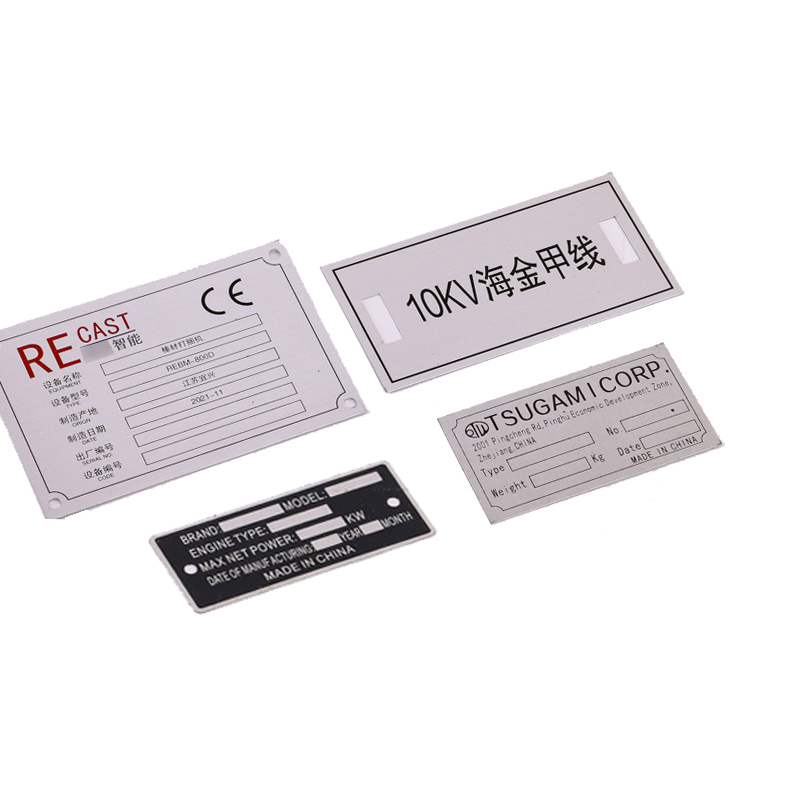
Understanding the main product types helps you avoid costly specification errors. Every product category carries specific limitations. We must assess these trade-offs honestly to choose the ideal use case. A well-designed Cable Identification strategy relies on deploying the right marker in the right place.
Heat-shrink sleeves excel in high-vibration, harsh environments. They physically grip the wire jacket tightly. You avoid adhesive failure completely because they use mechanical tension. However, their limitations include the need for a heat gun. This slows down the initial installation process. Furthermore, you absolutely cannot install them post-termination.
Self-laminating wrap-around labels remain the industry standard for control panels. They feature a clear tail that overlaps and protects the printed text. This lamination blocks dirt and minor abrasions. They work perfectly for post-termination tagging. The main limitation is their vulnerability to unpeeling. If the wire surface is oily or dusty during application, the adhesive will fail. Edge lifting, commonly known as flagging, occurs frequently if improperly applied.
Rigid tags and cable ties serve thick power cables and multi-core bundles. Highly textured conduits also require these products. When adhesives fail on rough surfaces, you need mechanical fasteners. Rigid tags tie down securely. Their primary limitation is bulkiness. They can catch on moving parts in tight enclosures. You must route them carefully to avoid physical interference.
Product Category | Ideal Environment / Best For | Primary Limitations | Application Phase |
|---|---|---|---|
Cable Label Sleeves (Heat Shrink) | High-vibration, harsh environments where adhesives fail. | Requires a heat gun; slower install; useless on connected wires. | Pre-Termination Only |
Self-Laminating (Wrap-arounds) | Standard control panels, retrofits, post-termination tagging. | Vulnerable to unpeeling if wire is oily, dusty, or dirty. | Post-Termination |
Rigid Tags & Cable Ties | Thick power cables, multi-core bundles, highly textured conduits. | Bulky profile; can easily catch on moving parts in tight spaces. | Post-Termination |
Technical parameters differentiate industrial-grade markers from commercial-grade equivalents. You cannot ignore environmental hazards. Evaluating these constraints ensures your labels survive their intended lifespan. We must analyze temperature, chemical exposure, weathering, and rigorous industry standards.
Temperature and thermal resistance dictate material choice immediately. You must distinguish between standard operating temperatures and extreme industrial heat. Standard vinyl labels perform adequately in climate-controlled server rooms. However, they melt in high-heat manufacturing zones. Extreme heat requires high-performance materials like Polyimide. Polyimide withstands massive temperature fluctuations without warping. It maintains text legibility even near industrial furnaces.
Chemical and solvent exposure degrades inferior labels rapidly. You must evaluate resistance against hydraulic fluids, aggressive cleaning agents, and industrial lubricants. Aerospace and automotive sectors rely heavily on Skydrol and harsh degreasers. Standard ink smears instantly upon contact. You need chemically resistant topcoats to seal the printed information safely.
UV and weathering destroy plastics over time. Outdoor telecommunications and solar wiring demand UV-resistant materials. Sunlight causes standard plastics to suffer from severe brittleness. The material cracks and falls off the wire. Furthermore, UV exposure causes ink fading. You must specify UV-stabilized materials to prevent this degradation. Always verify outdoor longevity ratings before deployment.
Industry standards provide the ultimate benchmark for reliability. You should always verify compliance markers before purchasing. Look for UL recognized components. Ensure RoHS compliance for environmental safety. Defense and aerospace projects require strict SAE/MIL-spec adherence. Telecommunications infrastructure must meet ANSI/TIA-606-C standards. Following these established frameworks guarantees you are utilizing properly vetted materials. It protects you during rigorous facility audits.
Sizing errors cause massive headaches during installation. A practical calculation guide prevents these common mistakes. You must understand the relationship between wire dimensions and label capacities. Do not rely on guesswork. We follow strict methodologies to ensure a perfect fit every single time.
The most common sizing error involves outer diameter versus gauge. Relying solely on the American Wire Gauge (AWG) is extremely risky. AWG only measures the copper conductor inside. It ignores varying insulation thicknesses completely. For example, a 12 AWG THHN wire has much thinner insulation than a 12 AWG MTW wire. If you size a sleeve based on AWG alone, it might fit the THHN but fail to slide over the thicker MTW. Always calculate using the exact Outer Diameter (OD).
Calculating for heat-shrink sleeves requires understanding shrink ratios. Standard ratios include 2:1 and 3:1. A 3:1 sleeve shrinks to one-third of its original supplied diameter. Follow these simple rules for perfect sleeve sizing:
Measure the exact OD of your wire jacket using digital calipers.
Select a sleeve diameter minimally larger than the wire OD before shrinking. This ensures it fits easily over terminals or lugs.
Verify that the fully recovered (shrunk) diameter of the sleeve is smaller than your wire OD. This guarantees it will grip the wire tightly post-shrink.
Sizing wrap-around labels requires basic geometry. If the label is too short, the clear tail will not overlap the text. It will peel off rapidly. You must calculate the exact circumference of the wire to determine the minimum label length.
Step 1: Find the wire OD.
Step 2: Calculate the circumference (Circumference = OD x 3.14).
Step 3: Ensure the total label length is at least 1.5 to 2 times the calculated circumference.
This simple formula ensures the clear tail fully overlaps. It seals the printed text securely underneath. Following this calculation eliminates the dreaded flagging effect permanently.
Mitigating rollout risks ensures the chosen product performs as specified in the field. Even the highest quality materials fail if improperly printed or applied. We must examine printer compatibility, ribbon matching, and surface preparation closely. These implementation realities dictate the success of your entire project.
Printer compatibility dictates long-term legibility. Industrial applications absolutely require thermal transfer printing. You must avoid standard laser or inkjet printers. Inkjet prints smudge instantly under industrial stress. Laser toners flake off flexible materials. Thermal transfer technology uses heat to melt a solid ribbon onto the label material. This process creates an incredibly durable, permanent bond.
Ribbon-to-material matching remains critical. Your label is only as durable as the ink printed upon it. You cannot mix and match randomly. Wax ribbons work well on standard paper but rub off industrial plastics. You must match a high-durability resin ribbon with polyester or polyimide labels. The resin chemically bonds with the synthetic material. This withstands heavy abrasion and severe chemical exposure. Always consult manufacturer matrix charts to verify correct pairings.
Application best practices prevent premature failures. Surface preparation is mandatory. You must clean wire surfaces thoroughly before applying self-adhesive labels. Wires often retain slippery manufacturing oils from the extrusion process. If you wrap a label over these oils, the adhesive never bonds to the actual jacket. Use isopropyl alcohol wipes to strip away dirt and grease. Let it dry completely. Apply the label using firm, even pressure. This simple cleaning step prevents edges from lifting. It guarantees your investment remains secure.
Evaluating and selecting the correct industrial wire markers requires a systematic approach. You must determine your termination status first. This decides whether you need slip-on sleeves or wrap-around tags. Next, define your specific environmental hazards carefully. Account for heat, chemicals, and UV exposure. Then, calculate the exact outer diameter to prevent sizing errors. Finally, verify your printer and ribbon compatibility to ensure permanent legibility.
Investing in the correct materials prevents costly downtime. It eliminates massive troubleshooting delays during critical outages. Properly marked wires keep your personnel safe and your facility compliant with strict industry regulations.
Take action today to upgrade your infrastructure. Review your current panels for degraded markers. Direct your engineering team to download a detailed specification sheet. Utilize an online product selection filter tool to match your exact parameters. We highly recommend requesting material samples for rigorous field testing before placing bulk orders.
A: Unpeeling is usually caused by surface contamination prior to application. Extrusion oils and panel dust destroy adhesive bonds instantly. Another common cause is selecting a label too short to properly overlap its clear tail. Finally, using a standard acrylic adhesive in a high-heat environment causes rapid failure. Always clean wires with alcohol first and calculate the circumference correctly.
A: This is not recommended for industrial environments. Sharpie ink degrades rapidly, smudges under friction, and fails to meet strict compliance standards like UL or military specifications. Printable heat-shrink sleeves are specifically chemically treated. This topcoat bonds permanently with thermal transfer resin, ensuring the text survives harsh chemicals and heavy abrasion.
A: You should avoid standard vinyl adhesives entirely in washdown zones. High-pressure water easily lifts adhesive edges. Instead, use heat-shrink sleeves for pre-terminated connections. For post-termination, use mechanically fastened rigid tags made of stainless steel or specific polyurethanes. These products do not rely on sticky adhesives to stay permanently attached.


