


Views: 0 Author: Site Editor Publish Time: 2026-09-02 Origin: Site


Short circuits do not just trip breakers; they unleash massive electromechanical violence. I have seen bare cleats fail catastrophically on offshore rigs simply because they lacked proper supplementary support. Without a buffer, continuous friction and thermal expansion will chew through an expensive cable jacket in a matter of months. In this guide, we will break down exactly how liners and brackets keep your system intact when things go wrong, ensuring long-term stability and compliance.
Enhanced Protection: A compliant pad absorbs operational vibrations and prevents abrasion, effectively extending the lifespan of the outer cable sheath under heavy mechanical stress.
Fire Safety Compliance: Utilizing specialized low-smoke materials is a critical specification for minimizing toxic gas emissions and maintaining visibility during fire emergencies.
Structural Integrity: A robust bracket ensures secure, stable attachment to various structural surfaces, maintaining overall cleat performance when subjected to extreme electromechanical fault forces.
Long-Term Durability: Investing in high-grade metallic support guarantees superior corrosion resistance, making it the standard choice for harsh, heavy industrial, or offshore marine environments.
System Optimization: Selecting the correct supplementary components during the procurement phase streamlines the installation process and prevents costly operational downtime.
In industrial and commercial electrical engineering, a cable management system is only as strong as its weakest link. While cable cleats are designed to perform the heavy lifting by containing the violent electromechanical forces generated during a short circuit, they operate within a larger mechanical ecosystem. Relying solely on a bare cleat clamped directly to a cable and bolted to a ladder rack often leaves critical vulnerabilities. When an electrical contractor bolts a rigid metal clamp over a soft polymer jacket, that physical mismatch requires a buffer to prevent long-term degradation.
To mitigate these vulnerabilities, engineers rely on a highly specific ecosystem of supplementary components. Internal protection primarily consists of liners and pads that sit between the rigid metal of the cleat and the soft jacket of the cable. On the other hand, external structural support includes adapters, stand-offs, and brackets that interface between the cleat itself and the primary supporting structure, such as a concrete wall, perforated tray, or unistrut channel.
For procurement professionals and electrical contractors, specifying the correct cable cleat accessories at the design stage is a fundamental requirement for proactive risk management. Properly selected components reduce long-term maintenance costs by preventing premature cable wear. Furthermore, they ensure that the entire installation complies with strict international testing standards, such as IEC 61914. Without these supplementary parts, even the highest-rated cleat may fail to protect the cable infrastructure adequately.
Looking at the broader industrial landscape, the global push toward grid modernization, renewable energy, and rapid digitalization is fundamentally reshaping how engineers approach cable management. Recent grid analyses highlight a massive surge in offshore wind farm constructions and hyperscale data center expansions. Because modern power grids are handling higher capacities, the potential short-circuit fault levels have increased dramatically. This means the electromechanical forces exerted on cables during a fault are higher than ever before.
As a direct result, the market is seeing a definitive shift away from basic, commodity-level fixings toward highly engineered, application-specific accessories. Regulatory bodies are tightening compliance standards worldwide. Consequently, procurement teams can no longer view mounting hardware and protective liners as mere afterthoughts. They are now recognized as critical infrastructure investments that safeguard multi-million-dollar electrical assets against extreme environmental and electromechanical threats.
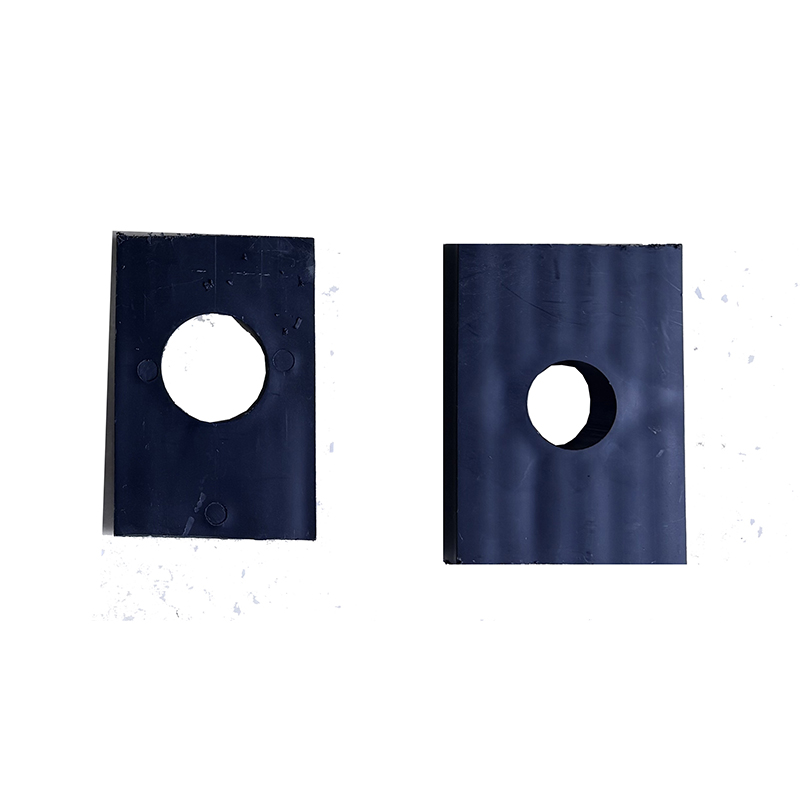
Walk through any active pumping station or industrial plant, and you will notice that heavy-duty power cables are rarely static. During normal operation, alternating current (AC) generates continuous micro-movements and low-frequency vibrations. Over time, if a heavy cable is clamped directly against a hard metallic surface, these micro-movements cause significant frictional wear. A cable protection pad liner acts as an industrial shock absorber. By providing a compliant, resilient layer between the cleat and the cable jacket, the liner dampens these continuous operational vibrations. During a short circuit, this cushioning effect becomes even more critical, preventing the hard edges of the cleat from slicing into the cable sheath.
Power cables generate heat when operating under high electrical loads. Due to the Joule heating effect, the conductive core and the surrounding insulation naturally expand. If a cable is rigidly clamped by a bare metal cleat with no tolerance for movement, this thermal expansion can cause the cable jacket to buckle, warp, or tear. High-quality polymer or rubber liners provide the necessary volumetric tolerance. For example, a premium non-slip pad extruded from flame-retardant polymer is designed to operate safely between -40°C and +120°C. It compresses slightly as the cable heats up, allowing for natural thermal movement without compromising the secure grip required during a fault.
When designing electrical infrastructure for commercial, industrial, or public sectors, mitigating fire risks is a primary engineering directive. While cable cleats provide mechanical retention, the internal components interfacing directly with the cable jacket must also align with strict fire safety protocols.
Standard cable liners are frequently manufactured from basic PVC. While cost-effective, they pose a severe hazard during a fire, releasing dense, black smoke alongside highly toxic hydrogen chloride gas. Conversely, an LSZH cable liner is engineered from specialized thermoplastic or thermoset compounds containing absolutely no halogens. Meeting UL94 V-0 flame retardancy standards, these materials undergo an endothermic reaction when burned, releasing only water vapor and carbon dioxide. In confined spaces like underground transport tunnels or offshore rigs, the introduction of toxic gases can be far more lethal than the thermal heat of the fire itself. Specifying LSZH materials ensures high light transmittance is maintained for emergency exits, while preventing corrosive damage to nearby electronic equipment.
In the field, electrical installations rarely feature perfectly uniform mounting surfaces. Engineers frequently encounter situations where cable trays, structural steelwork, or concrete walls require specific stand-offs. A standard cleat base may not align seamlessly with the rungs of a ladder tray. A cable mounting bracket bridges this physical gap. By acting as an engineered interface, brackets allow for secure, customized installations. This prevents contractors from having to drill unapproved holes into structural steel, a practice that compromises the building's overall integrity.
During a fault, the magnetic forces between cables can reach thousands of Newtons per meter in a fraction of a second. While the cleat holds the cables together, it is the bracket that anchors the entire assembly. A heavy-duty adapter is engineered to absorb and transfer this immense physical shear force from the cleat to the primary supporting structure. Without properly rated anchoring hardware, the sheer violence of a short circuit could rip the cleat entirely off the wall.
When specifying mounting hardware, material selection dictates the longevity of the installation. Standard galvanized steel might be sufficient for climate-controlled indoor buildings, but it falls drastically short in demanding settings. For outdoor, marine, and heavy industrial applications, rust is a constant threat. A stainless steel support bracket serves as the industry standard defense. Specifically, utilizing 316L austenitic stainless steel—which contains molybdenum—drastically increases resistance to localized pitting and chloride corrosion. Unlike galvanized steel that relies on a thin zinc coating, 316L stainless steel possesses an inherent, self-repairing passive oxide layer, ensuring decades of reliable service.
To clearly illustrate the value of premium supplementary support, the following table compares basic commodity fixings with highly engineered cable accessories.
Feature | Standard Accessories (PVC/Galvanized) | Engineered Accessories (LSZH / 316L) |
|---|---|---|
Fire Safety | Emits toxic halogens and thick black smoke. | Zero halogens, low smoke, UL94 V-0 rated. |
Corrosion Resistance | Prone to rust if zinc coating is scratched. | Self-repairing oxide layer (316L Marine Grade). |
Thermal Tolerance | Degrades under extreme heat or freezing cold. | Stable performance from -40°C to +120°C. |
Vibration Dampening | Minimal shock absorption. | High compression tolerance, prevents sheath abrasion. |
Procurement professionals and engineers must approach the selection of supplementary hardware with rigorous scrutiny. Here is a practical checklist to ensure your installation remains secure and compliant.
1. Match the OD Precisely: The physical dimensions of the cable dictate the accessory requirements. Accurately measure the overall outer diameter (OD) of the cable, factoring in manufacturing tolerances. The internal pad must fit snugly, providing adequate compression without deforming the conductive cores.
2. Conduct an Environmental Audit: Evaluate whether the installation is indoors or outdoors. UV exposure requires UV-stabilized materials. If the site features airborne chemicals or salt spray, utilizing 316L stainless steel hardware is strictly necessary to prevent galvanic corrosion.
3. Verify Fire Ratings: If there is a high risk of fire or the installation is in a confined space (data centers, tunnels, hospitals), specifying low-smoke, zero-halogen (LSZH) materials is non-negotiable.
4. Check System Compatibility: Mixing components from different vendors introduces unknown variables. Independent third-party testing (such as IEC 61914 compliance) is conducted on a complete assembly. Source your cleats, liners, and brackets as a unified ecosystem to maintain warranty validity and safety compliance.
Cable accessories are the critical bridge between basic cable retention and comprehensive infrastructure protection. A strong mounting bracket keeps your system securely anchored to imperfect surfaces, while an LSZH liner adds vital fire safety and mechanical buffering against vibration and thermal expansion. Together, these meticulously engineered parts ensure long-lasting safety and prevent catastrophic failures during a short circuit. Do not leave your expensive cable infrastructure vulnerable to abrasion or poor mounting. Evaluate your installation environment thoroughly, and upgrade your system today by exploring the highly engineered, compliant solutions available at https://www.supercleat.com.
While they may not be explicitly mandated by every local electrical code, they are highly recommended by international engineering standards, such as IEC 61914. Utilizing proper supplementary components is the most effective way to prevent costly cable sheath damage and ensure that the structural integrity of the installation is maintained during extreme electromechanical faults.
The primary benefit is mechanical buffering. It prevents abrasion by creating a soft, resilient barrier between the hard edges of metal cleats and the vulnerable cable sheath. Additionally, it absorbs ambient operational vibrations and accommodates the natural thermal expansion and contraction of power cables under fluctuating electrical loads.
Low Smoke Zero Halogen materials should be requested for enclosed spaces, underground tunnels, marine vessels, and public infrastructure. They are critical anywhere fire safety is a priority, as they do not emit toxic, corrosive halogen gases or thick, vision-obscuring black smoke when exposed to extreme heat or direct flames.
Standard galvanized or aluminum brackets may be sufficient in dry, climate-controlled indoor environments. However, stainless steel is strictly required for outdoor, marine, offshore, or highly corrosive industrial settings where moisture, salt, and caustic chemicals would quickly degrade lesser metals.
Spacing depends entirely on the short-circuit fault level of the system and the outer diameter of the cables. You must calculate the peak electromechanical force (using IEC 61914 formulas) and match it against the cleat and bracket's tested withstand rating. Higher fault currents require brackets to be spaced much closer together to prevent cable whipping.
Mounting dissimilar metals directly against each other in the presence of moisture leads to galvanic corrosion. The less noble metal will rapidly degrade. Using a proper non-conductive polymer liner or isolation pad breaks the electrical continuity between the metals, completely preventing this corrosive reaction.


